

Book Summary
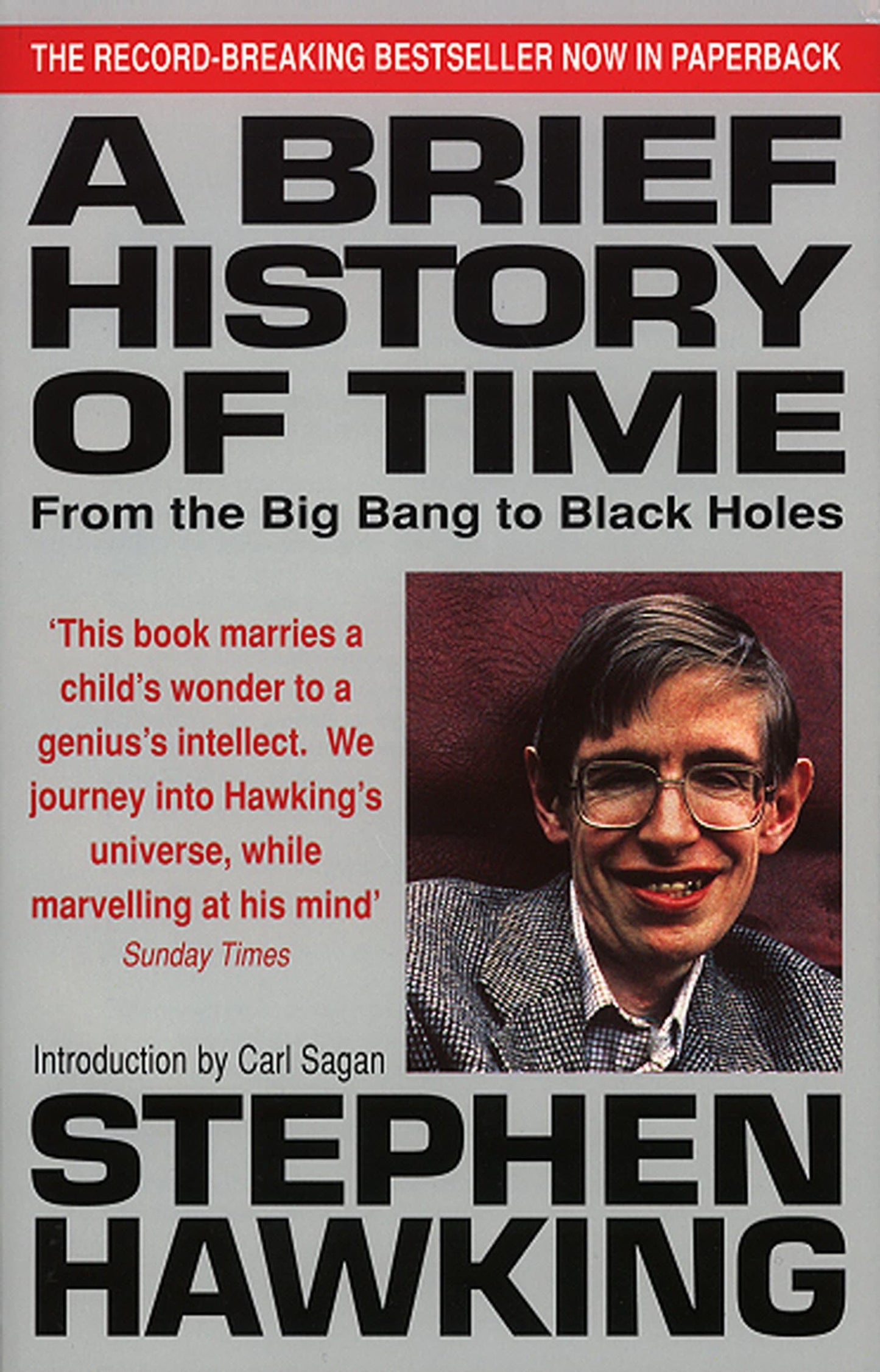
A Brief History of Time by Stephen Hawking is a landmark work that seeks to explain the most profound mysteries of the universe in simple, accessible language. The book explores fundamental questions about the nature of time, space, and the cosmos—how the universe began, how it works, and what its ultimate fate might be. Hawking introduces readers to key scientific theories such as the Big Bang, black holes, quantum mechanics, and Einstein’s theory of relativity, connecting them to the search for a unified “theory of everything.” Using clear explanations and vivid analogies, he examines how scientists have come to understand the universe and the role of time within it. The book challenges readers to think deeply about existence, the laws of physics, and humanity’s place in the cosmos, blending scientific insight with philosophical reflection.
About the Author –
Stephen Hawking (1942–2018) was a British theoretical physicist, cosmologist, and author, celebrated as one of the most brilliant scientific minds in modern history. Despite being diagnosed with amyotrophic lateral sclerosis (ALS) at the age of 21, which gradually paralyzed him, Hawking continued his groundbreaking research into black holes, quantum gravity, and the origins of the universe. He served as the Lucasian Professor of Mathematics at the University of Cambridge, a position once held by Isaac Newton. His contributions, particularly his theory that black holes emit radiation (now known as Hawking radiation), revolutionized modern physics. Beyond academia, Hawking became a global icon through his bestselling books, including A Brief History of Time, The Universe in a Nutshell, and The Grand Design. His life and work continue to inspire millions, representing the triumph of intellect and curiosity over physical limitations.
![The Science of Getting Rich, The Science of Being Well and The Science of Being Great [Trilogy Set of 3 Books] by Wallace D. Wattles [Premium Books]](http://clappingpages.com/cdn/shop/files/walla.jpg?v=1767779540&width=533)


![How to Develop Self-Confidence & Influence People by Dale Carnegie: Wilco Classics Sprayed Edge Premium Hardback Edition [Premium Books]](http://clappingpages.com/cdn/shop/files/sw_027cda9f-51fa-4f99-aa19-7f50da20f275.jpg?v=1767175433&width=533)

![Getting to 'I Do' by Pat Allen| Sandra Harmon [rare books]](http://clappingpages.com/cdn/shop/files/gt_9c14e8c1-6f18-4a2a-ad4e-c712d26c35a3.jpg?v=1764228426&width=533)
![Death of A Salesman by Arthur Miller [Premium Books]](http://clappingpages.com/cdn/shop/files/sale.jpg?v=1771321876&width=533)