


Book Summary
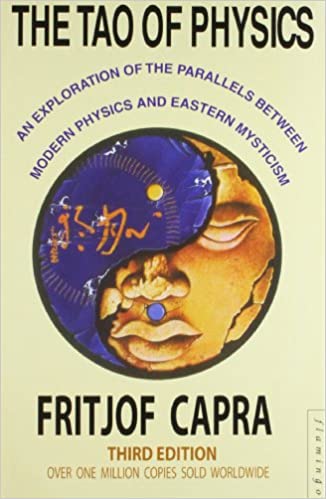
The Tao of Physics explores the parallels between modern physics and Eastern mysticism, arguing that the discoveries of quantum mechanics, relativity, and particle physics reveal a worldview strikingly similar to ancient spiritual traditions such as Taoism, Buddhism, and Hinduism. Capra explains how concepts like interconnectedness, unity, and the illusion of separateness appear in both subatomic physics and mystical philosophy. He uses accessible explanations of scientific theories—such as wave-particle duality, quantum fields, and the relativity of space and time—to show that Western science and Eastern mysticism ultimately describe a dynamic, holistic universe. The book encourages readers to see reality not as a collection of isolated objects, but as an interdependent process in constant change. It remains influential for bridging science and spirituality and inviting a more integrated understanding of the world.
About the Author:
Fritjof Capra is an Austrian-born physicist, systems theorist, and author known for his work exploring the connections between science, philosophy, and ecology. Trained in theoretical physics, he conducted research in particle physics before turning his attention to the broader cultural and philosophical implications of scientific discoveries. Capra’s writing blends scientific rigor with an interest in holistic thinking, making complex ideas accessible to general audiences. Beyond The Tao of Physics, he has written influential books on systems thinking, sustainability, and the interconnectedness of natural and social systems. His work has contributed to the shift toward ecological awareness and interdisciplinary thinking in both science and society.

![The Science of Getting Rich, The Science of Being Well and The Science of Being Great [Trilogy Set of 3 Books] by Wallace D. Wattles [Premium Books]](http://clappingpages.com/cdn/shop/files/walla.jpg?v=1767779540&width=533)


![How to Develop Self-Confidence & Influence People by Dale Carnegie: Wilco Classics Sprayed Edge Premium Hardback Edition [Premium Books]](http://clappingpages.com/cdn/shop/files/sw_027cda9f-51fa-4f99-aa19-7f50da20f275.jpg?v=1767175433&width=533)

![Getting to 'I Do' by Pat Allen| Sandra Harmon [rare books]](http://clappingpages.com/cdn/shop/files/gt_9c14e8c1-6f18-4a2a-ad4e-c712d26c35a3.jpg?v=1764228426&width=533)
![Death of A Salesman by Arthur Miller [Premium Books]](http://clappingpages.com/cdn/shop/files/sale.jpg?v=1771321876&width=533)